
Leadership · Strategy · Delivery
What teams need from leadership to deliver together
Understanding how a team is doing matters. But how do we help several teams make independent decisions at speed when they have to deliver a shared business outcome?
That becomes especially challenging when the outcome is complex and the timeline ambitious.
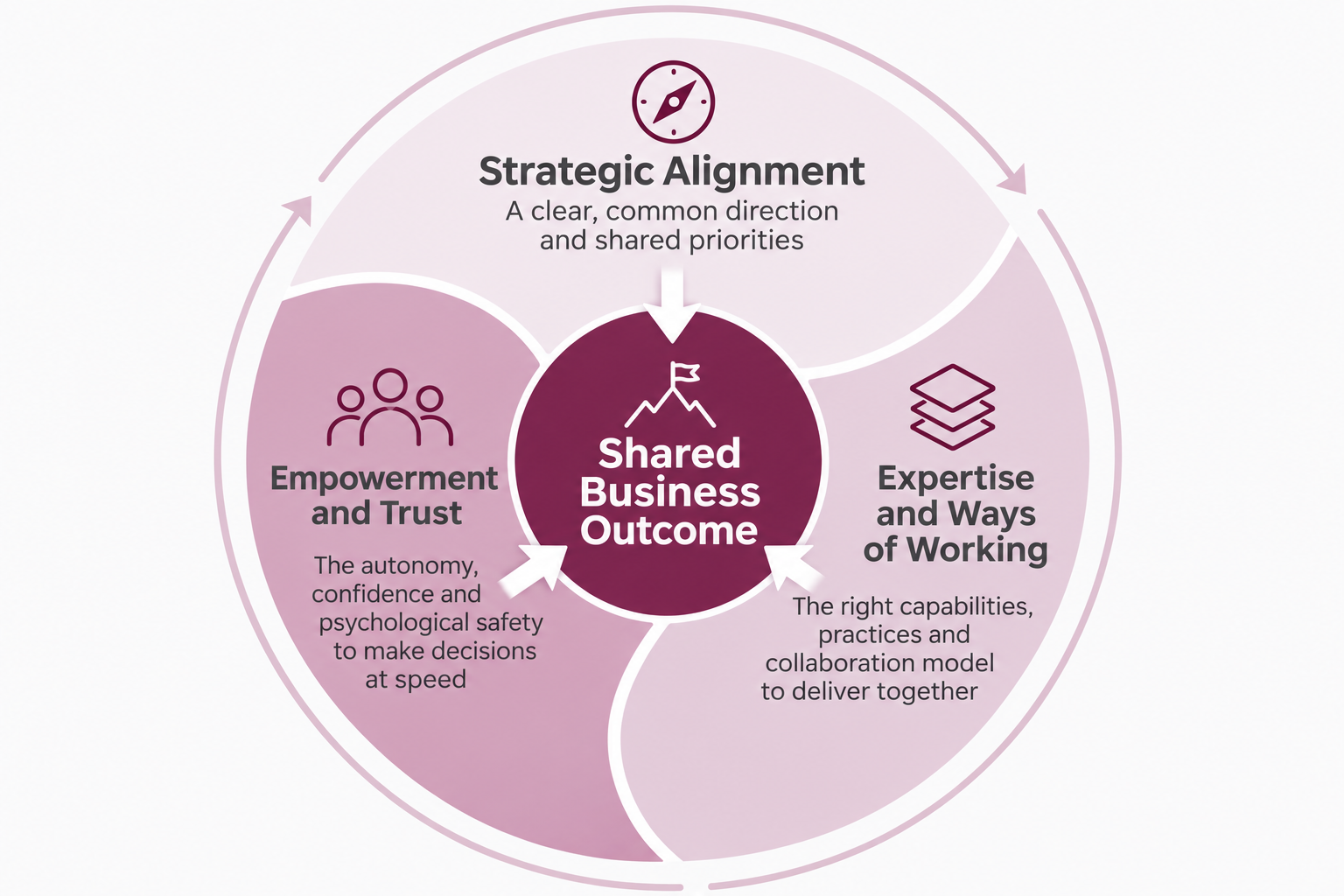
Over the years, I’ve come to see three pillars as essential: strategic alignment, empowerment and trust, and expertise and ways of working. As leaders working across teams, we have a role in bringing these together, giving people a common direction and the support to move towards it.
Strategic alignment
We need everyone on the same page, with a clear North Star. As leaders, we need to make sure people understand what we’re trying to achieve together and why it matters.
But how does that shared vision help when teams face competing priorities? We need to work through those tensions with them, bringing the conversation back to the outcome we’re trying to achieve. Sometimes that means making a choice about what takes priority, rather than leaving teams to negotiate competing expectations.
We also need to make our expectations and the reasoning behind decisions accessible. And we need teams involved early, so that direction benefits from their knowledge and makes sense in practice.
In one transformation, architectural decision records helped make that reasoning available across teams. The format can vary. What matters is that people understand the broader direction and have enough context to make decisions without constantly seeking approval.
Alignment needs attention as the work evolves. When a decision affects several teams, we need to bring those perspectives into the conversation, work through the disagreement, and help everyone commit to a way forward.
One approach we used was to bring teams affected by a shared outcome into a decision forum. They had a voice in shaping the solution. When discussions risked becoming circular, we returned to our North Star, worked through the trade-offs, and committed to a way forward.
A study of 249 multiteam systems found that training specialized teams to develop a shared understanding of the problem improved collective performance through better coordination between teams. The study took place in a research exercise setting.
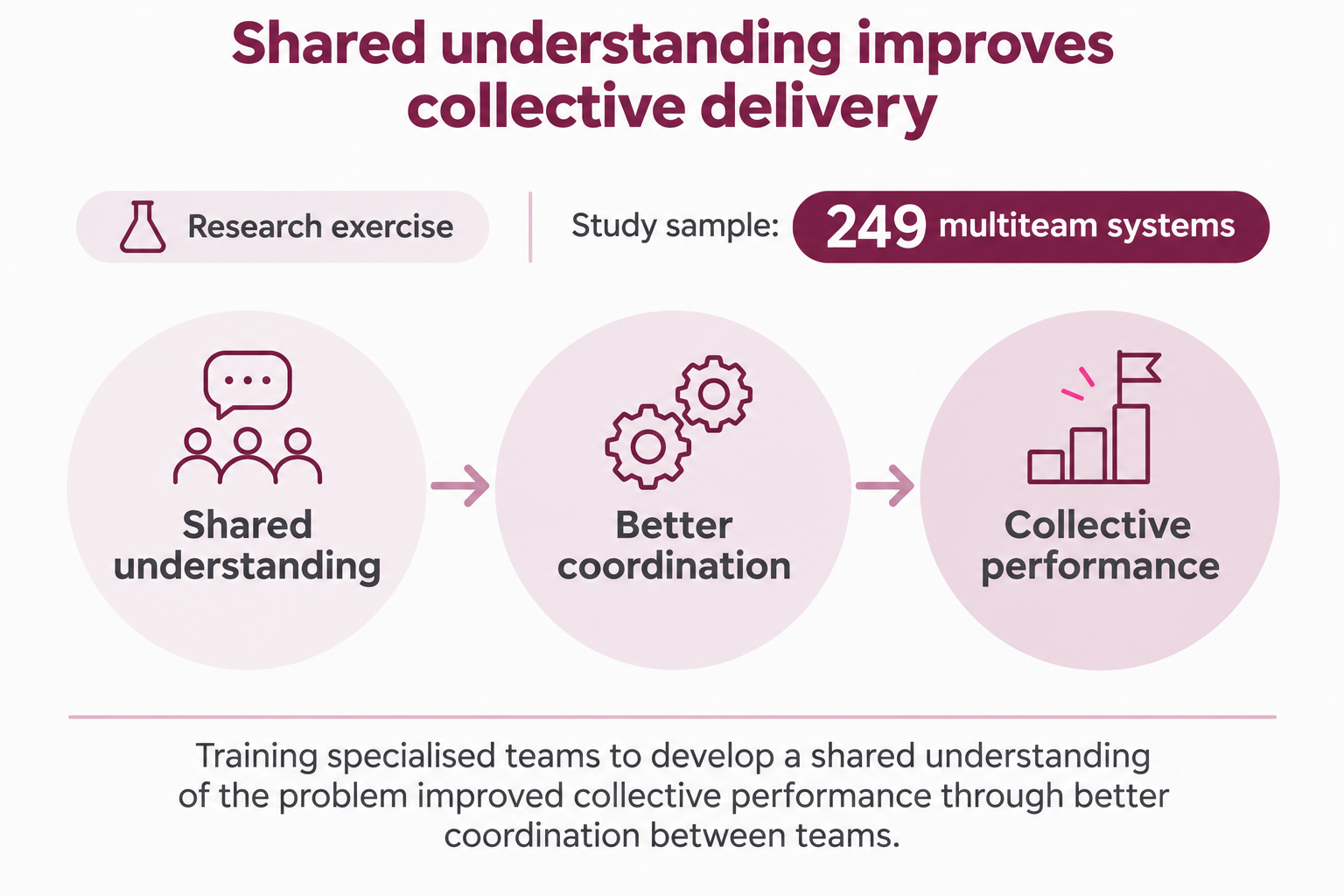
For me, that reinforces why alignment needs more attention than a kickoff presentation. As leaders, we need to help teams understand the problem they’re solving together, and what their decisions mean for each other.
Empowerment and trust
We bring people into our organizations for their knowledge and experience. We need to listen to them, value their perspectives, and trust them to apply what they know.
That means being willing to move decisions closer to where the work happens. As leaders, we need to be clear about the authority teams have and when they need to involve others. If every meaningful decision still comes back to us, we need to understand why.
Do people lack context? Are the boundaries unclear? Or have our own responses taught them that seeking approval is safer than taking ownership?
We also need to give people room to own the outcome of their work. That includes understanding what happens after a handover, learning whether their contribution achieved its purpose, and being able to respond when it hasn’t.
Accountability needs to come with authority and support. And that support needs to hold when an experiment fails or someone challenges an approach. How we respond in those moments tells people how much trust they really have.
Expertise and ways of working
Trusting people to deliver also means making sure they have what the work requires. As leaders, we need to understand the expertise we’re asking teams to draw on, recognize gaps, and help address them. We also need to make room for people to develop and share their knowledge.
Then there are the practicalities. Do teams have useful tools and timely feedback? Do they understand the quality expectations? Where are they repeatedly waiting on others or solving problems that someone elsewhere has already solved?
We need to work with teams to address those obstacles. Shared tools and practices can help, provided we involve the people who will use them and understand where consistency helps and where flexibility matters.
In one program, regular readiness exercises brought teams together to rehearse demanding conditions before launch. Those sessions exposed gaps in workflows, tooling, and training. They gave people opportunities to prepare together and address weaknesses before the launch depended on them.
Bringing teams together also means being thoughtful about when they need to work closely and when they should be able to move independently. Team Topologies makes a useful distinction between collaborating to solve a problem, helping another team build capability, and providing a service others can use independently.
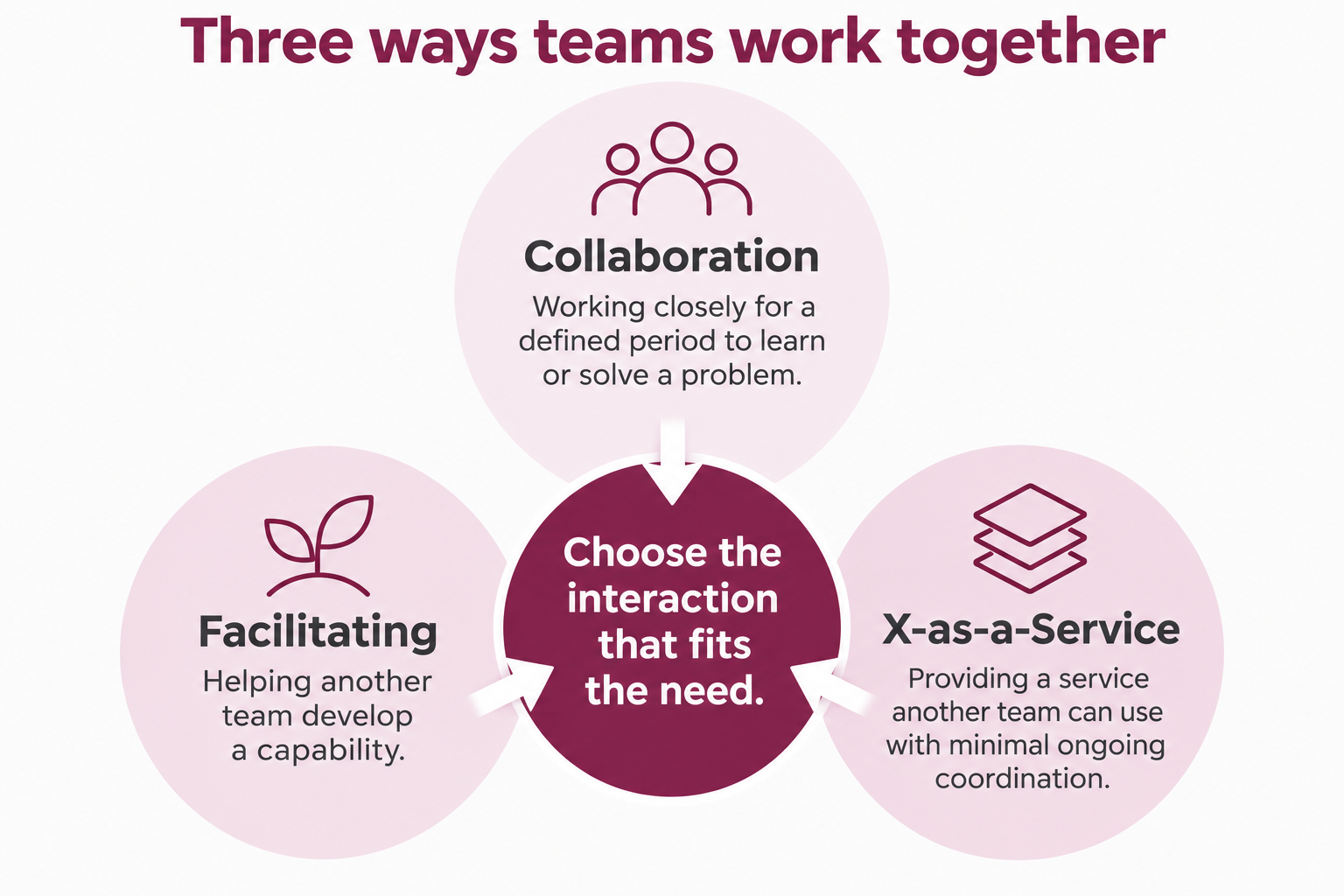
As leaders, we need to help teams establish those expectations. If every decision requires another meeting between teams, we should look at what is keeping them dependent on each other.
We can also help knowledge travel across teams. Technical demos are one approach I’ve seen people value enough to continue themselves. The opportunity is broader: giving people space to share experiments, discuss problems, and learn from one another.
The wider question for us as leaders is: have we organized the work so teams can move forward, or are our structures making that unnecessarily difficult?
Bringing it together
A shared vision helps people make decisions. Trust gives them room to apply their judgment. Expertise and ways of working give them the means to follow through.
As leaders, we need to keep paying attention to all three. Do people understand what we’re trying to achieve? Have we trusted them with the decisions their work requires? And are we giving them the support to deliver together?